The Key to Long-Lasting Brick-Slip Facades
Water Absorption Below 3%
Brick slips are considered a durable and low-maintenance solution for high-quality facades – especially when combined with modern ETICS (External Thermal Insulation Composite Systems). One decisive and often underestimated factor is the water absorption of the ceramic material, which significantly influences durability and service life.
Brick slips from TONWERK-Klinker feature a water absorption rate well below 3%. They are manufactured exclusively in Germany using regional natural clay resources and short transport routes. The energy-intensive ceramic production process is continuously optimized and transparently documented through an Environmental Product Declaration (EPD). This provides verified, comparable environmental data and makes the material quality of tonwerk brick slips transparent – particularly for planners and architects.
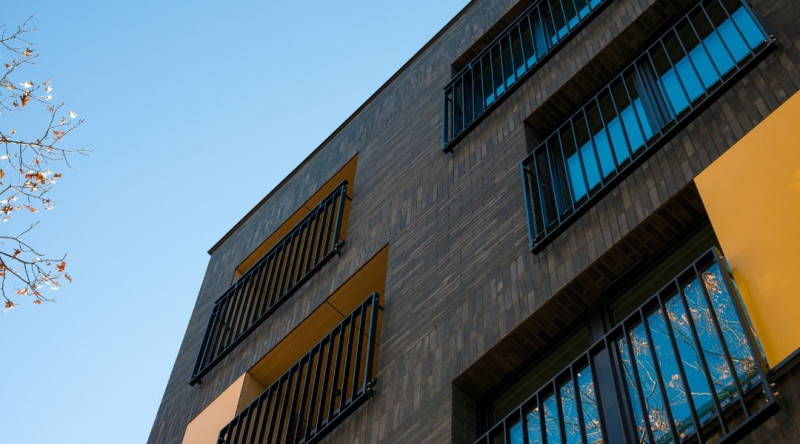
The Role of Water Absorption in ETICS Facades
But what does low water absorption actually mean in terms of planning, installation, and the long-term performance of a facade? And why is this parameter particularly important for insulated exterior walls (ETICS)?
Water absorption indicates how much moisture a ceramic product can take up relative to its own weight. The lower this value,
-
the less moisture penetrates the material
-
the stronger the adhesive bond within the ETICS system remains
-
the more resistant the facade is to weathering and environmental stress
Brick slips with water absorption below 3 % are considered highly dense, sintered, and of premium quality.
Sintering is a thermal densification process in which ceramic raw materials, such as clay, are fired at high temperatures so that they fuse into a dense, solid, and permanently durable structure – without the material fully melting.
Why Is Low Water Absorption So Important for ETICS Facades?
Moisture plays a critical role in ETICS systems. If water penetrates the system, it can lead to long-term damage. Low water absorption ensures:
-
higher freeze-thaw resistance
-
minimal risk of spalling
-
permanently stable adhesion
-
consistent facade appearance over decades
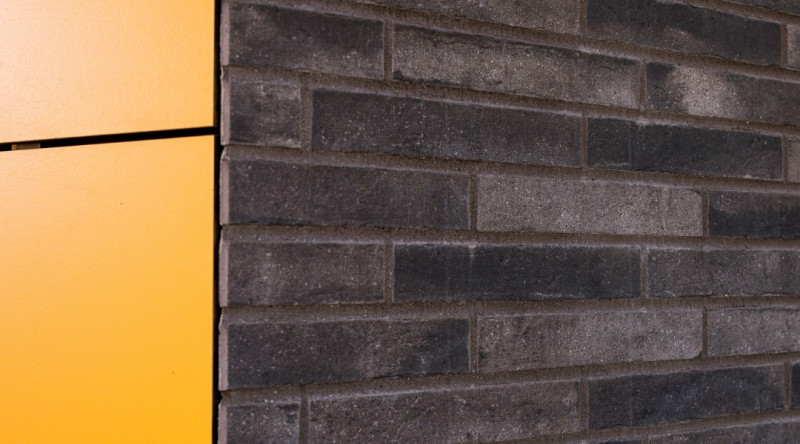
Higher Freeze-Thaw Resistance
Brick slips with low water absorption withstand freeze-thaw cycles particularly well. Since only minimal moisture penetrates the material, microcracks caused by freezing and thawing are avoided. This ensures a permanently stable facade – even in Central European climates with frequent temperature fluctuations.
Minimal Risk of Spalling
Low water absorption reduces moisture penetration that could otherwise lead to spalling or material damage. Brick slips from TONWERK-Klinker maintain their shape and surface over decades without the need for costly repairs.
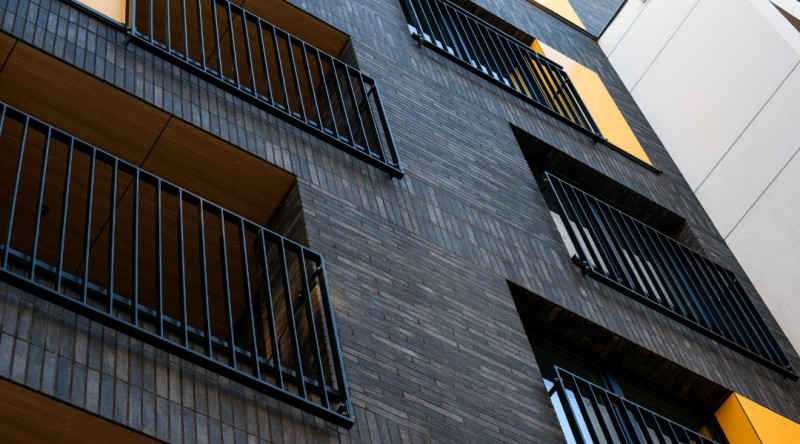
Permanently Stable Adhesion
Low water absorption supports a reliable bond between the brick slips and the ETICS substrate. This ensures durable adhesion that withstands mechanical stress and long-term weather exposure.
Consistent Appearance Over Decades
Thanks to minimal moisture absorption, the surface of the brick slips remains unchanged and the facade retains its aesthetic appearance for decades. Color intensity, texture and finish remain stable – a decisive factor for high-quality architectural projects.
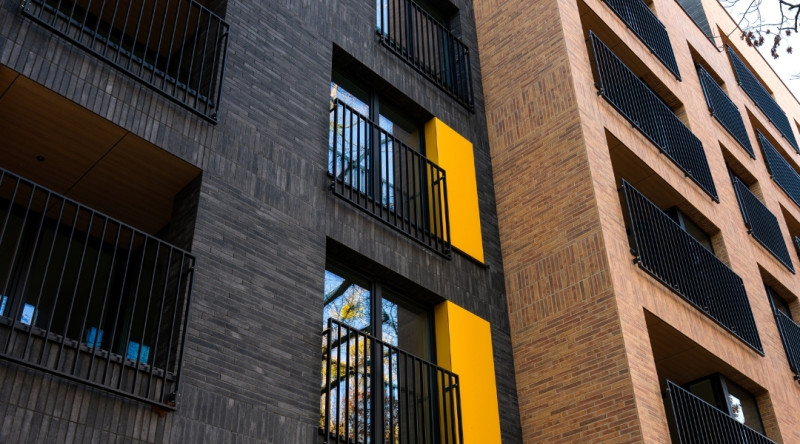
The carefully controlled water absorption of brick slips is more than just a technical parameter – it forms the foundation of long-lasting, reliable facades. With a water absorption rate below 3 %, tonwerk brick slips combine technical precision, material density, and frost resistance, enabling them to withstand even the most demanding ETICS systems.
These properties also have a direct impact on the economic side of a construction project: low maintenance requirements, long-term stability, and lasting property value make them a safe and sustainable investment. Brick slips from TONWERK-Klinker represent quality that begins beneath the surface and delivers performance throughout the entire lifecycle of a facade.
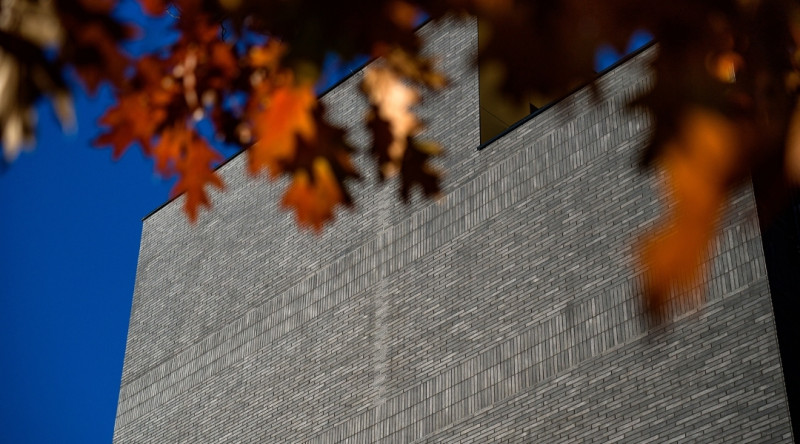
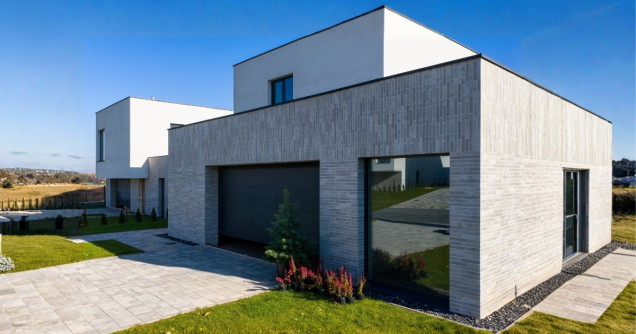
Reference images: Project Senatorska 29 Dark, Łódź (Poland)